

How the Right Window Curtains Can Change the Way Your Space Feels in Dubai
Window curtains are no longer just a functional accessory tucked behind blinds in 2026, they have become one of the most dynamic elements of interior design in Dubai. Whether you’re renovating your villa in Jumeirah, rejuvenating a Business Bay apartment, or designing a corporate workspace, thoughtfully chosen curtains can dramatically impact aesthetics, comfort, energy efficiency, and privacy. With Dubai’s intense sunlight, architectural diversity, and mix of traditional and contemporary interiors, choosing the right window treatments goes beyond picking a color or fabric it’s about smart design that adapts to lifestyle and climate.
Why Window Curtains Matter in Dubai Interiors
Window curtains serve multiple roles in a home or office:
- Aesthetic enhancement: They frame your windows and can define the mood of a space from soft and breezy to bold and dramatic.
• Light & privacy control: Choosing light-filtering sheer curtains versus dense blackout fabrics gives you control over brightness and privacy throughout the day.
• Temperature regulation: In a city where sunlight can be relentless, curtains with thermal linings help reduce heat gain and complement air conditioning systems.
• Comfort & atmosphere: From residential living rooms to formal office cabins, curtains add softness and warmth, balancing hard architectural surfaces with textiles.
Dubai’s climate conditions also mean that curtains aren’t just decorative — they play a practical role in managing heat and glare while preserving cool interior conditions.
Popular Curtain Types You’re Likely to See in Dubai Projects
Across contemporary residential and commercial projects in the UAE, several curtain styles continue to stand out:
- Sheer Curtains for Light & Elegance
Sheer curtains let soft natural light fill your interior while maintaining a level of privacy. They’re ideal for living rooms and lounges where brightness and ambience matter most.
- Blackout Curtains for Bedrooms & Media Spaces
If your priority is complete darkness or heat reduction especially in bedrooms or home theatres blackout curtains absorb sunlight and block it entirely.
- Linen Curtains for Natural Texture
Linen Curtains give a relaxed yet refined finish that complements Dubai’s luxury and minimalist interiors. They pair beautifully with neutral palettes.
- Grommet Curtains for Modern Installations
Curtains with grommets are easy to slide and give a contemporary edge to your décor perfect for sleek, modern homes.
Design Tips for Dubai Homes & Offices
Here are some considerations that many designers in the UAE prioritize when planning window treatments:
Choose fabrics that handle sunlight intelligently:
Dubai’s high UV exposure can fade fabrics and heat interiors. Thermal or UV-resistant linings can make a significant difference over time.
Layer curtains for flexibility:
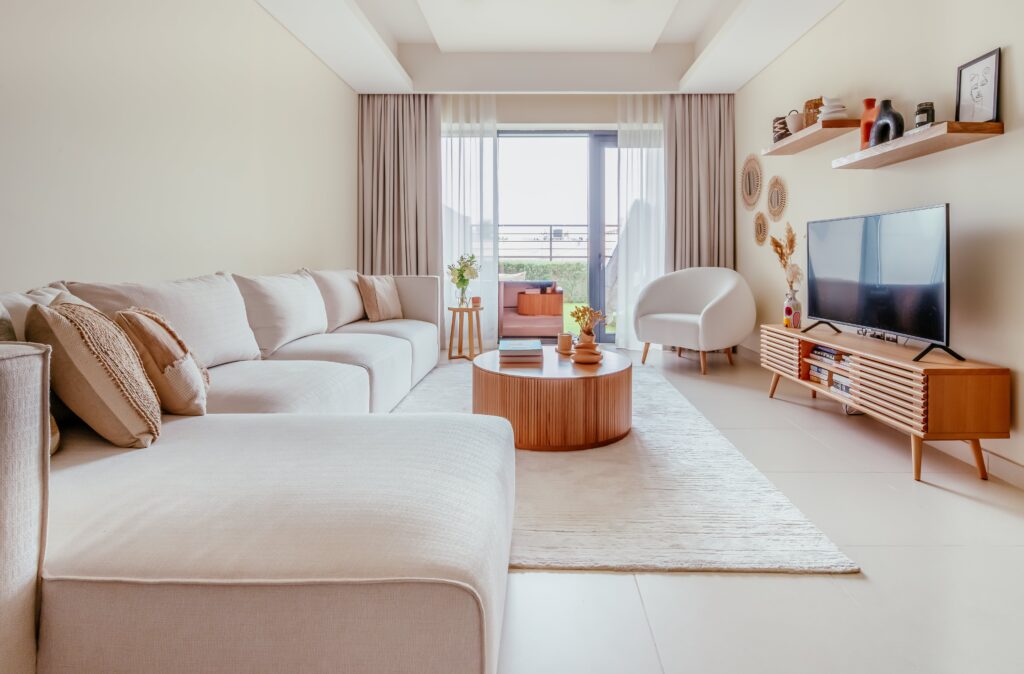
Combining sheer curtains with heavier drapes gives you the best of both worlds — daytime brightness and night-time privacy. This layered approach is becoming a hallmark of sophisticated Dubai interiors.
Consider automation for high or hard-to-reach windows:
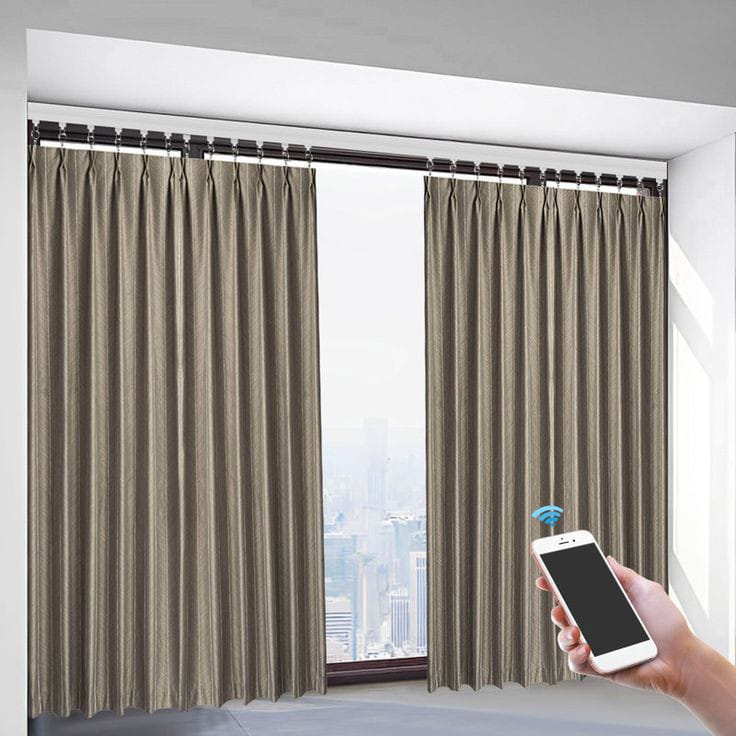
Motorized curtain tracks controlled by apps or voice commands are increasing in popularity, especially in modern luxury projects.
Match curtains to the room’s function:
Bedrooms may priorities blackout and noise reduction; while living and dining areas focus on atmosphere and light. Offices might emphasize glare control and professionalism.
Caring for Your Curtains in Dubai’s Climate
Dubai’s desert environment — with frequent dust, intense heat, and UV exposure — calls for some extra attention when it comes to curtain maintenance:
- Regular gentle vacuuming or dusting extends fabric life.
- Periodic dry clean or professional cleaning preserves texture and color.
- Avoid prolonged exposure to direct sunlight to prevent fading.
Well-maintained curtains not only look better but also last longer, remaining an investment rather than an expense.
Frequently Asked Questions (FAQs)
- What’s the best curtain fabric for Dubai’s intense sunlight?
Lightweight linens and sheers keep interiors bright and airy, while thermal or blackout linings protect from heat and glare — combining both in layers often gives the best balance. - How do curtains help with room temperature?
Curtains with thermal backing act as a barrier against heat gain, reducing reliance on air conditioning and improving comfort. - Are motorized curtains worth the investment in Dubai?
Yes — especially for tall windows or smart homes, motorized systems offer convenience, energy savings, and integration with home automation. - How often should curtains be replaced?
Curtains generally last 5–7 years, but in Dubai, you might consider replacement sooner if fabrics fade or lose performance due to strong sun exposure. - Should curtains be matched exactly with wall color?
Not necessarily. Contrasting tones or complementing shades often add depth to a room the key is harmony with overall design and lighting.
Conclusion
Window curtains in Dubai aren’t just an afterthought they are a strategic design and comfort feature that enhances your space visually and functionally. By choosing the right fabrics, styles, and installations that respond to light, heat, and lifestyle needs, you can transform any room whether it’s a villa, apartment, or office into a space that feels cooler, more elegant, and uniquely yours.
Popular Posts
June 17, 2024
June 22, 2024
June 30, 2024

July 13, 2024