
Blackout Curtains Dubai
Blackout curtains for bedrooms, media rooms, nurseries, shift-worker homes, and light-sensitive living spaces across Dubai.
Buy Blackout Curtains in Dubai
Dubai’s climate means sunlight from early morning and heat glare that pushes through standard curtains for most of the day. Thin or mid-grade curtains let in enough light to disrupt sleep, wash out screens, and raise room temperatures noticeably.
Blackout curtains are made from tightly woven or foam-coated fabric that blocks 99–100% of incoming light. Combined with the right lining and track, they keep rooms dark for sleeping, screen use, and temperature control regardless of the time or window direction.
We design, tailor, supply and install blackout curtains for bedrooms, home cinemas, nurseries, night-shift households, and any residential or commercial space in Dubai where unwanted light is a daily problem.
Book a Free Visit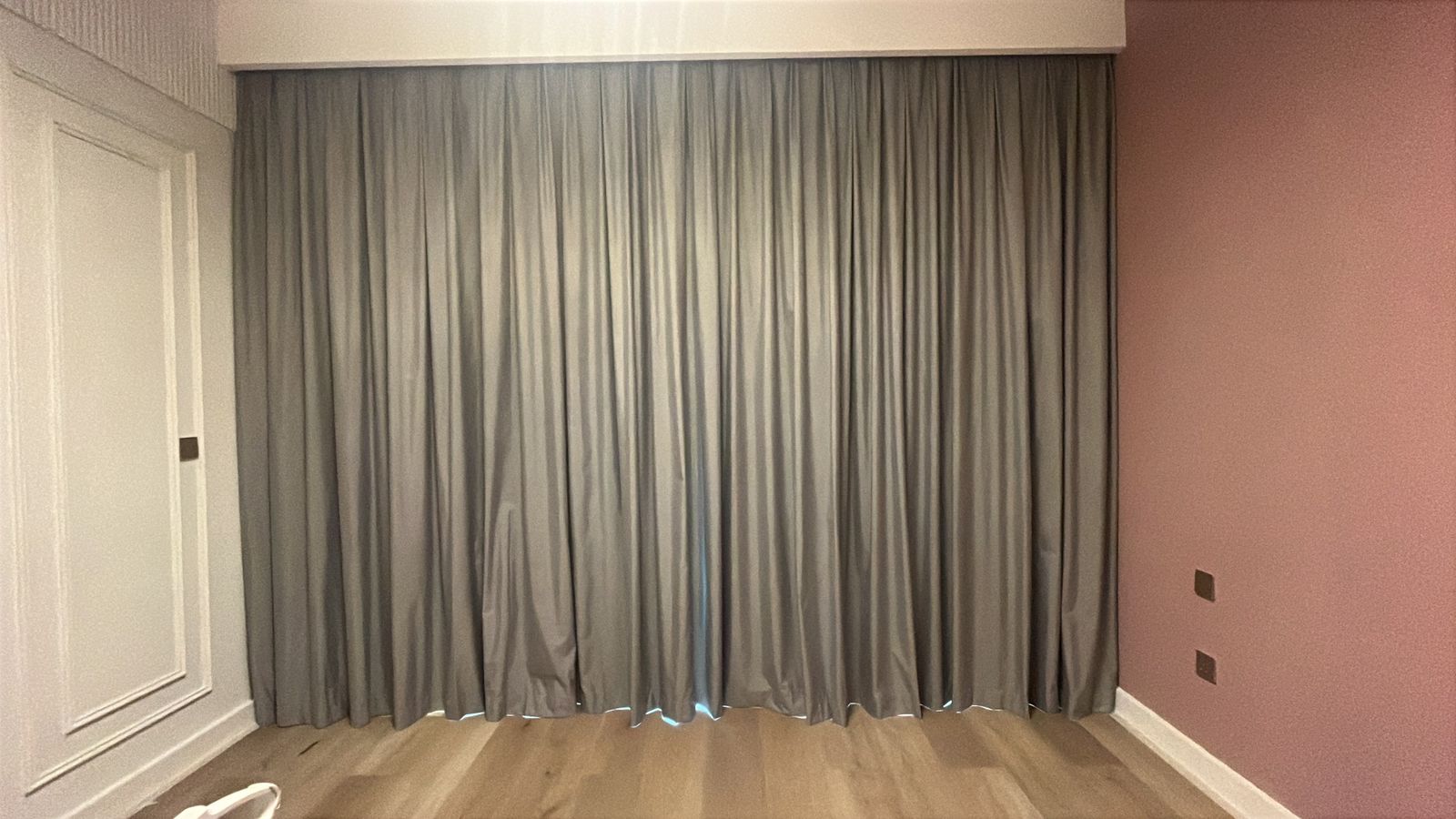
Why Blackout Curtains Work Better Than Regular Curtains
Most standard curtains sold in Dubai are decorative first and functional second. They soften incoming light. They do not stop it. In a city with over 300 sunny days a year, that is not enough.
Blocks 99–100% of Sunlight
Blackout curtains use tightly woven triple-pass or foam-backed fabric that stops light at the fabric level, not just at the lining. No orange glow, no edge bleed when hung correctly.
Reduces Room Temperature
Blackout fabric reflects solar heat before it enters the room. In direct-sun-facing rooms in Dubai, this noticeably lowers how quickly the room heats up between morning and midday.
Improves Sleep Quality
Melatonin production is disrupted by low light levels. Blackout curtains create the darkness the body needs to fall asleep faster and stay asleep longer, particularly for daytime sleepers.
Works on All Window Sizes
Blackout curtains are fabricated to cover floor-to-ceiling windows, bay windows, narrow bedroom windows, and sliding balcony doors without gaps or bunching at the edges.
Reduces Outside Noise
Heavier blackout fabrics with thermal lining add a layer of sound dampening. Street noise and external sound is reduced, not eliminated, but the difference is high in rooms facing busy roads.
Long Life Under Dubai UV
Standard curtains bleach and thin out within 18–24 months in Dubai's UV conditions. Blackout curtains use UV-stabilized coatings that hold their light-blocking performance and color.
Types of Blackout Curtains
Eyelet Blackout Curtains
Eyelet blackout curtains have metal rings punched through the header fabric and hang from a pole. They open and close in neat, even folds. The fabric is typically triple-pass coated and hangs flat. Best for bedrooms and living rooms with rod fittings.
Pencil Pleat Blackout Curtains
Pencil pleat blackout curtains gather into tight, uniform folds at the header and attach to a track or pole via hooks. The pleating adds fullness which improves edge coverage. Widely used in master bedrooms and hotel-style rooms for clean look.
Pinch Pleat Blackout Curtains
Pinch pleat curtains have fabric gathered into evenly spaced pinched groups. It hangs with a structured drape and works well where the curtain is both a light blocker and a focal design element. Suitable for formal rooms and serviced apartments.
Advantages of Blackout Curtains in Dubai

Controls Light on Your Schedule
Blackout curtains give full control over when light enters a room. Early sunrise is blocked. Afternoon glare is eliminated. Night-shift workers sleep through peak daylight hours.
Lowers Cooling Costs
By blocking solar heat gain through windows, blackout curtains reduce how hard air conditioning works to maintain room temperature. It translates to reductions in energy bills.
Protects Furniture and Flooring
Direct sunlight fades upholstery, timber flooring, and rugs. These curtains intercept UV rays before they reach inside, extending the life of furniture and finishes in sun-facing rooms.
How to Choose Blackout Curtains for Your Space
Choosing blackout curtains comes down to how the room is used, the window size, and what the curtain needs to do beyond blocking light.
Decide Curtain Placement
Bedrooms and nurseries typically need 100% blackout. Living rooms and home offices may need light-filtering blackout rather than total darkness. Specify by room function, not just preference.
Measure Floor to Ceiling
Curtains that stop at the window frame let light in at the top and bottom. Blackout curtains must run from ceiling to floor and extend 100–150mm beyond the window frame on each side.
Decide Fabric Weight
Lightweight fabric works in bedrooms with still air. Rooms with ceiling fans or AC vents toward the curtain need heavier fabric, typically 280 gsm or above, to keep the curtain hanging flat.
Choose Header Style
Eyelet headers suit rod systems. Pencil and pinch pleat headers work on tracks. The type decides which is compatible and affects how much coverage you get across the window width.
Decide on Lining
Blackout curtains can come with a thermal, an acoustic, or a standard blackout lining. Thermal lining helps with heat. Acoustic lining helps with noise. Standard lining handles light only.
Consider the Color
The room-facing side shapes the interior look, while the window-facing side affects heat. Light linings reflect heat better, while darker fabrics absorb more sunlight in Dubai’s strong sun.
Blackout Curtain Installation in Dubai
We measure, fabricate, and install blackout curtains for bedrooms, nurseries, home cinemas, and commercial spaces across Dubai with hardware and fitting matched to your window type.
Site Visit
Assess windows, light entry, and room use.
Measurement
Precise floor-to-ceiling and width dimensions taken.
Fabric Selection
Fabric weight, lining, and header style confirmed.
Fabrication
Curtains cut and assembled to room dimensions.
Installation
Tracks or poles fitted, curtains hung and tested for coverage.
Flexible Scheduling Available
Book a site visit for your Dubai bedroom, nursery, or home cinema blackout curtain project.
Cost of Blackout Curtains in Dubai
Blackout curtain pricing depends on room dimensions, fabric grade, lining type, and the number of windows being covered. Contact us for an exact blackout curtain quote.
-
No Surprise Charges
Pricing is per window before fabrication starts.
-
Fabric-Grade Pricing
Entry, mid, and premium blackout fabric options.
-
Hardware Included
Track or pole systems are part of installation.
-
Per-Room Quotes
Priced based on measurements and specifications.

Blackout Curtains That Actually Block Light, Not Just Dim It
Most curtains sold as "blackout" in Dubai still allow light in at the edges, through the fabric, or at the header. Our blackout curtains in Dubai are made from certified blackout fabric, sized to exceed the window frame on all sides, and hung on hardware that keeps the curtain flat and sealed against the wall during use.
500+
Projects Completed15+
Years Experience100%
Satisfaction RateRoom-darkening curtains reduce light by 70-85%, leaving a visible glow at edges and through the fabric. Blackout curtains use certified fabric that blocks 99-100% of light. For sleep, shift work, or nurseries, only blackout-rated fabric is adequate.
Yes. Blackout fabric with thermal lining reflects solar radiation before it passes through the glass layer into the room. In direct-sun rooms, this reduces how fast room temperature rises and lowers how frequently air conditioning cycles on during peak afternoon hours.
Curtains should extend at least 100-150mm beyond the frame on each side and run from ceiling to floor. Any shorter and light enters at the edges and bottom, especially in the morning when sun angles are low and direct.
Yes. Blackout curtains made from non-toxic, certified fabrics are widely used in nurseries. Daytime naps and early bedtimes are significantly easier when the room is fully dark. Ensure the track or pole hardware is fixed at full ceiling height and out of reach.
Low-quality blackout fabric degrades within 12-18 months under Dubai’s UV exposure, causing the coating to crack and light to pass through. UV-stabilized blackout fabric maintains its 99-100% blocking rating for several years when installed away from direct water or humidity sources.