
Darkroom Curtains Dubai
Darkroom curtains made for photography studios, darkrooms, film labs, and light-sensitive workspaces across Dubai.
Buy Darkroom Curtains in Dubai
Photography studios, film darkrooms, and light-sensitive processing labs in Dubai need more than a heavy curtain pulled across a window. Any light leak from a gap, edge, or thin fabric ruins film, distorts color grading, and makes precision work impossible.
Darkroom curtains are built from multi-layer blackout fabric with zero light transmission and fitted with channel-track or recessed systems that seal every edge. No light bleeds from the sides, bottom, or header. The result is a room that stays completely dark regardless of the time of day or window orientation.
We supply and install darkroom curtains for photography studios, processing labs, film production spaces, and any commercial or residential workspace in Dubai that requires complete and reliable blackout from floor to ceiling.
Book a Free Visit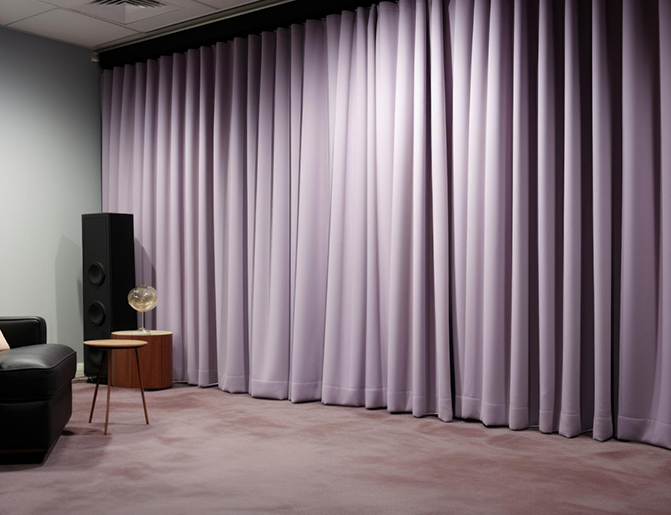
Why Darkroom Curtains Are Not the Same as Regular Blackout Curtains
Most blackout curtains sold in Dubai block 80–90% of light. That is enough for a bedroom. It is not enough for a darkroom. Even a 1% light leak can expose photographic paper, contaminate a developing tray, or throw off a color calibration session.
Zero Light Transmission
Darkroom curtains use triple-weave or foam-backed blackout fabric with 0% light transmission certified by the manufacturer.
Edge Sealing Matters
Standard curtain tracks leave gaps at the sides. Darkroom curtain systems use recessed channels or magnetic edge seals.
Built for Working Environments
Darkroom curtains are installed in rooms where people work with chemicals, equipment, and light-sensitive materials daily.
Handles Any Window or Opening
Darkroom curtain systems are fabricated to cover any skylights, doorways, ventilation openings, and irregular window shapes.
No Fading Under UV Exposure
Dubai's UV levels degrade standard blackout fabrics quicker. Darkroom curtain fabrics carry UV stabilization built into the coating.
Works with Lab Ventilation Systems
Darkroom spaces have active ventilation running during sessions. Curtain fabric weight and track tension are specified to hold under airflow without pulling away from the edge seals.
Types of Darkroom Curtains
Channel-Track Blackout Curtains
Channel-track systems run the curtain fabric through a recessed aluminum channel fixed to the wall perimeter. The fabric slides within the channel and seals flat against the surface when closed. Best for doorways and windows in darkrooms.
Double-Layer Blackout Curtains
Two layers of blackout fabric on separate tracks provide redundant light blocking. The inner layer handles complete blackout while the outer layer acts as a secondary seal. Used in film processing labs and high-sensitivity photography spaces.
Curtain Maze Entry Systems
Used at darkroom entry points where a door is impractical. Two overlapping curtain panels hung on offset tracks create a light-trap corridor. A person can enter or exit without opening the space to external light at any point during the transition.
Benefits of Darkroom Curtains in Dubai
Total Light Elimination
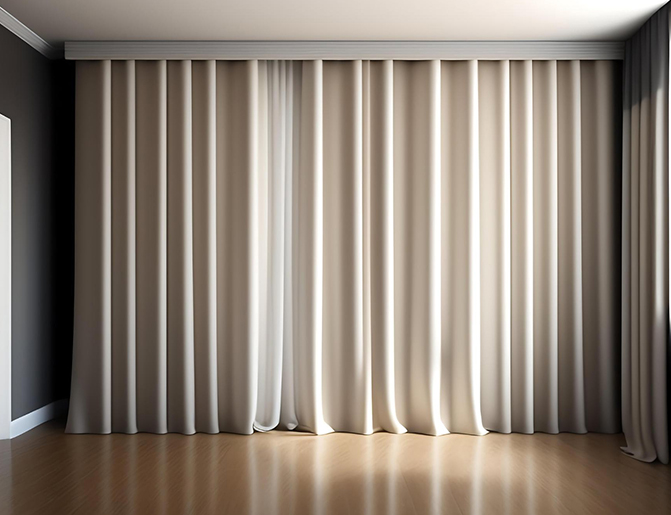
Darkroom curtains with certified 0% light transmission and edge-sealed tracks block every lumen from entering the space. No other curtain achieves this level of light control.
Preserves Photosensitive Materials
Film, photographic paper, and developing chemicals react to trace amounts of light. Darkroom curtains handle that, protecting materials and avoiding waste from accidental exposure.
Reversible and Removable
Unlike blacked-out paint or permanent wall panels, darkroom curtains can be removed when a space changes use. The track system stays in place, and the curtains detach without damaging walls or window frames.
How to Choose Darkroom Curtains for Your Space
Selection of the right darkroom curtains is essential as their function is unique from other curtains. Compared to other curtains, darkroom curtains have different criteria.
Identify Every Light Entry Point
Windows, skylights, door gaps, ventilation grilles, cable entry points, and light switches with LEDs all contribute to light contamination. Specification starts with a full audit of the space.
Choose Fabric by Certification
Fabric described as "blackout" or "room darkening" covers a wide range of light transmission levels. Darkroom curtain fabric must carry a third-party certified 0% light transmission rating.
Select the Track System
Windows need perimeter channel tracks. Doorways need dual-panel offset track systems or a maze entry configuration. Skylights need horizontal motorized tracks with weighted fabric.
Specify Fabric Weight
Darkrooms with active chemical ventilation units need heavier curtain fabric, typically 300 to 450 gsm, to maintain seal pressure against edge channels when airflow is running.
Plan for Safe Light Compatibility
Darkroom curtains seal out white light but many darkroom setups use amber or red safelights. Curtain fabric color on the inside should not reflect safelight frequencies in ways that interfere.
Ensure Edge Sealing and Overlap
Curtains must overlap wall edges and track channels to prevent light leaks. Side channels, weighted hems, and sealed corners help maintain complete darkness during operation.
Darkroom Curtain Installation in Dubai
We measure, fabricate, and install darkroom curtain systems for photography studios, film labs, processing rooms, and light-sensitive commercial spaces across Dubai.
Site Audit
Map every light entry point in the room.
Measurement
Measure channel depth, clearance, and dimensions.
Fabrication
Curtains and channel tracks are cut and assembled.
Installation
Every unit is fitted and tested in complete darkness.
Handover
Get full guidance on operation and maintenance.
Flexible Scheduling Available
Book a site visit for darkroom curtain installation project for your Dubai photography or processing space.
Cost and Value of Darkroom Curtains
Darkroom curtain pricing depends on opening dimensions, fabric certification grade, track system type, and the number of light entry points. Contact us for an exact quote.
-
No Hidden Charges
Clear pricing per opening.
-
Protects Expensive Materials
Prevents film and paper waste.
-
Long-Term Performance
UV-stable and commercial hardware rated.
-
Specified per Room
Pricing based on its actual light sealing needs.
Darkroom Curtains Fitted for Areas that Need 100% Darkness
Off-the-shelf blackout curtains leave gaps, let in residual light, and fail within months under Dubai's UV exposure. Our darkroom curtains are fabric-certified to 0% light transmission, edge-sealed to eliminate every gap, and installed with the hardware and track tension to hold position through years of daily studio use.
500+
Projects Completed15+
Years Experience100%
Satisfaction RateFrequently Asked Questions
Blackout curtains reduce light by 80–95%. Darkroom curtains use certified 0% light transmission fabric with edge-sealed channel tracks that eliminate all measurable light. Blackout curtains are for sleep. Darkroom curtains are for photosensitive work where any light ruins the result.
Yes. Channel track systems are surface-mounted to the wall surrounding the window frame and do not require frame removal or modification. The curtain fabric overlaps the frame perimeter by 50–100mm on all sides and seals against the wall surface, not the frame itself.
Channel tracks fix to walls with removable anchor points in some configurations. The fabric panels detach from the track for transport. Full reinstallation at a new location requires re-measuring and re-anchoring the track, but the fabric can be reused if the opening dimensions are similar.
Rooms with running ventilation fans need fabric between 300 and 450 gsm. Lighter fabric deflects under airflow and pulls away from edge channel seals, creating light gaps. Heavier fabric maintains contact with the channel walls and holds its seal position even when air is actively circulating.
A properly specified maze entry system using two offset curtain panels on separate tracks provides equivalent light exclusion to a solid door when correctly dimensioned. It is used in professional film labs where frequent entry and exit make a solid door impractical during active processing sessions.