
Design Curtains Dubai
Design curtains made for homes, apartments, showrooms, and hospitality spaces across Dubai.
Buy Design Curtains in Dubai
Most curtains in Dubai cover windows. Design curtains do more than that. They set the tone of a room, define its colour palette, and complete the visual layer that furniture and paint alone cannot finish.
Design curtains are selected for fabric texture, drape pattern, pleat style, and how they interact with natural and artificial light inside the space. Every choice from heading tape to hem weight changes how the final curtain reads in the room.
We design, customize, and install design curtains in Dubai and across the UAE for villas, apartments, hotel suites, retail showrooms, and commercial interiors with full fabric consultation and in-home styling support.
Book a Free Visit
How Design Curtains Are Different from Ready-Made Curtains
Design curtains are made for your room, your ceiling height, your window width, and the specific light conditions inside your space.
Exact Dimensions
Design curtains have precise width and drop of your window or wall. No raw hems, no dragging fabric, and no short drops.
Fabric Selection
Fabric choice depends on room use: linen for bedrooms, velvet for dining rooms, and washable cotton blends for children’s spaces.
Pleat Style
Pinch pleat, eyelet, wave, and goblet headings each create a different silhouette when the design curtain hangs.
Varied Lining
Curtain lining shapes structure and function: interlining adds body, blackout lining blocks sunlight, and unlined ones appear flat.
Match Ceiling Height
Design curtains are specified with pole height, stack-back width, and drop length calibrated to the room's actual proportions.
Hardware Carries Equal Weight
Curtain hardware (brushed brass, matte black, chrome, or timber) shapes the overall look, so it’s chosen as part of design.
Types of Design Curtains
Pinch Pleat Curtains
Pinch pleat headings gather the fabric into groups of two or three folds stitched at the top. They hang in deep, structured columns and suit formal living rooms, dining spaces, and master bedrooms where a tailored silhouette is preferred.
Wave Curtains
Wave curtains use a cord-and-glider track system that pulls fabric into continuous, even curves across the full width of the window. They suit contemporary interiors, wide openings, and floor-to-ceiling glazing where a clean line is the priority.
Eyelet Curtains
Metal rings punched into the fabric heading thread onto a pole and create soft, uniform folds. Eyelet curtains work in casual and modern rooms, are easy to open and close manually, and suit bedrooms, living rooms, and open-plan spaces.
Benefits of Design Curtains
Define the Room's Scale
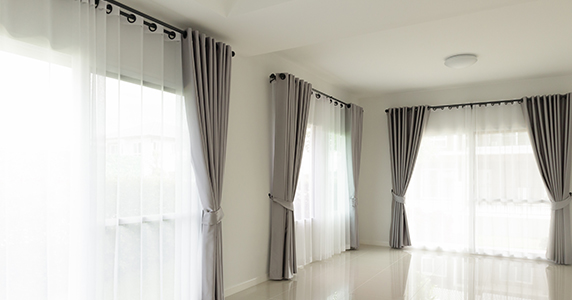
Curtains hung from ceiling to floor make a room feel taller and more proportioned. Curtains that stop at the window sill make the same room feel smaller and unfinished.
Manage Light Without Blocking It
Sheer and semi-sheer design curtains filter harsh sun in Dubai without removing daylight. The room stays bright while direct glare and UV exposure are reduced at the glass.
Add a Layer That Furniture Cannot
Sofas, rugs, and art sit in the room. Curtains frame it. A well-specified design curtain ties the wall color, floor finish, and upholstery together into a single visual composition.
How to Choose Design Curtains for Your Space
Design curtains involve more decisions than most people expect. The right sequence of choices avoids costly remakes.
Room's Color Temperature
Warm-toned rooms suit cream, terracotta, burnt orange, and earthy linen. Cool-toned rooms work with grey, navy, sage, and white. Choose color based on the room's existing palette.
Measure Drop Before Fabric Weight
Heavy fabrics like velvet and chenille need extra fullness and strong poles to hang well, while lightweight voile and linen require the right fullness ratio to avoid looking thin.
Heading Style Based on Track or Pole
Wave headings require a specific wave track and cannot be hung on a standard pole. Eyelet curtains need a pole, not a track. Pinch pleat curtains work on both, track and pole.
Account for Stack-Back Space
When curtains open, the fabric stacks beside the window. In rooms with narrow wall space, stack-back width determines whether the curtain clears the glass or blocks it.
Match Fabric to Room Use
Rooms with strong sunlight need UV-resistant fabrics to prevent fading. Busy areas require easy-clean materials, while rarely used rooms can accommodate more delicate fabrics.
Decide on Lining at the Start
Lining choice affects fabric weight, hang quality, and the view from outside. It is easier to specify lining during fabrication than to add it to a finished curtain. Make this decision early.
Design Curtain Installation in Dubai
We consult, measure, fabricate, and install design curtains for villas, apartments, showrooms, and hospitality properties across Dubai.
Consultation
Fabric samples, heading styles, and hardware reviewed.
Measurement
Exact window size, ceiling height, and stack-back space.
Fabrication
Curtains are cut, sewn, lined, and headed to specification.
Installation
Poles or tracks are fixed, curtains are hung and dressed.
Styling Handover
Final dressing, spacing, and break adjusted and demonstrated.
Flexible Scheduling Available
Book a home visit for your design curtain project anywhere in Dubai and across the UAE.
Cost and Value of Design Curtains
Design curtain pricing depends on fabric selection, heading style, lining type, window size, and the number of windows being fitted. Contact us for an exact design curtain quote.
-
No Guesswork Pricing
Quoted per window based on size and fabric
-
Diverse Fabric Options
From washable cotton blends to handwoven silk
-
Hardware Included
Poles, tracks, brackets, and finials included
-
No Remake Charges
Verify dimensions before cutting
Design Curtains That Actually Fit the Room
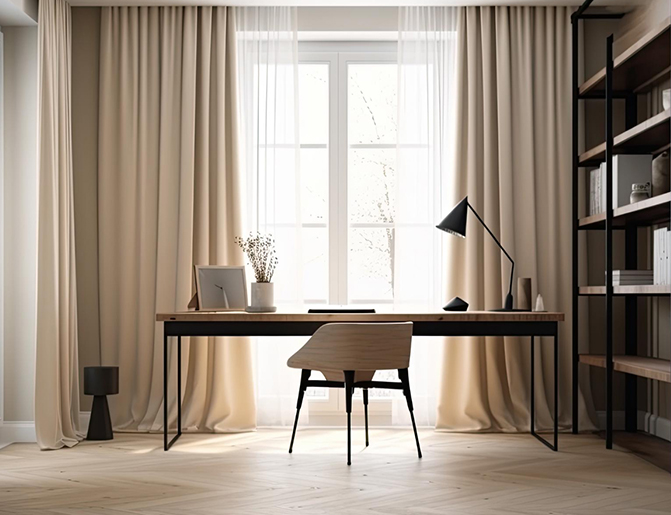
Off-the-shelf curtains in standard drops and generic fabrics rarely suit Dubai homes with custom ceiling heights, floor-to-ceiling glazing, and interiors built around a specific design brief. Our design curtains are made to your exact dimensions, specified to your room's light conditions, and installed with hardware that carries the full weight and character of the fabric for years of daily use.
500+
Projects Completed15+
Years Experience100%
Satisfaction RateLinen, polyester-linen blends, and solution-dyed acrylics resist UV fading in Dubai’s sun exposure. Pure cotton and silk degrade faster without blackout or thermal lining behind them. Fabric choice should factor in the window’s direct sun hours per day.
Standard fullness is 2 to 2.5 times the track or pole width. Wave curtains use 2 to 2.2 times. Velvet and heavy fabrics need the full 2.5 ratio to form proper folds. Cutting fullness to save fabric makes curtains look flat and underfilled.
Yes. Floor-to-ceiling glazing requires a ceiling-fixed track or a wall bracket mounted above the frame line. Fabric weight and track load capacity must be matched for drops over 280cm. Motorised tracks are recommended for wide openings that exceed manual reach.
It depends on the fabric and lining. Unlined polyester and cotton blends are machine washable on a cool cycle. Velvet, silk, and interlined curtains require professional dry cleaning. Always check the fabric specification sheet before washing, as shrinkage affects the finished drop.
Standard fabrication takes 10 to 14 working days after measurements are confirmed and fabric is approved. Custom fabric orders or imported materials can extend this to 3 to 4 weeks. Installation is typically completed in a single visit once the curtains are ready.