
Roller Blinds
Custom roller blinds in Dubai cut, specified, and installed for homes, apartments, villas, retail spaces, and commercial interiors.
Buy Roller Blinds in Dubai
Dubai windows get harsh sun from morning to evening, and most ready-made roller blinds fade, jam, or peel within months under that kind of daily UV exposure.
Roller blinds are specified by fabric type, openness factor, and cassette size based on the room’s light needs, privacy requirement, and window dimensions. Blackout fabric for bedrooms, solar screen for living areas, and moisture-resistant coating for kitchens and bathrooms each serve a distinct purpose.
We provide roller blinds for apartments, villas, retail shops, and offices across Dubai. Every blind is measured on-site, cut to exact dimensions, and fitted with hardware that handles daily use under Dubai’s heat.
Book a Free Visit
Why Roller Blinds Work in Dubai
Dubai's combination of year-round direct sun, large glazed windows, and strong temperature swings demands a window solution that performs every single day without degrading.
Blocks Solar Heat at the Glass
Solar fabric stops heat before it enters the room, reducing the load on split AC units and centralized cooling systems.
Clean, Minimal Profile
When raised, the entire blind rolls into a compact tube at the window head, leaving the full glass clear and the wall clean.
Works Across Every Room Type
One product family covers bedrooms, living rooms, kitchens, bathrooms, home offices, and commercial spaces.
One-Piece Coverage
A single roller blind panel covers windows up to 2.5 meters wide without seams, sagging, or uneven light gaps.
Child-Safe Operation
Available with spring-loaded cassettes, side-winding chains, or motorized tubular motors, eliminating long looped cords.
Fits Any Position
Roller blinds install inside the window recess for a flush built-in finish or face-fixed above the frame to cover a larger area.
Types of Roller Blinds
Blackout Roller Blinds
Blackout roller blinds use a coated fabric with sealed side channels or cassette housings to prevent light from entering around the edges. Suited for bedrooms, nurseries, home cinemas, and any room where complete darkness is required.
Solar Screen Roller Blinds
Solar screen fabric is woven with small perforations that cut direct glare and solar heat gain while keeping an outward view intact. Openness factors range from 1% to 10%, with lower percentages offering higher glare rejection.
Moisture-Resistant Blinds
These use a PVC-coated or polyester base fabric that does not absorb humidity, warp in steam, or grow mold behind the blind. PVC and polyester roller blinds are best for kitchens, bathrooms, laundry areas, and any window near water exposure.
How Roller Blinds Perform in Dubai Homes
Dubai's west-facing rooms bake in afternoon sun, bedrooms need full darkness for shift workers and young children, and humidity in bathrooms wrecks fabric not built for moisture. Off-the-shelf roller blinds are not made for any of these conditions at this scale.
Cuts Heat Before It Enters
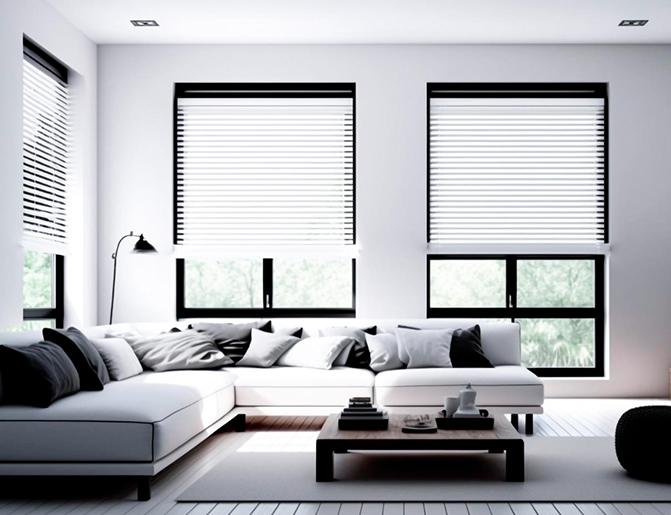
Solar roller fabric rejects up to 95% of solar heat gain at the glass surface, which impacts how hard the AC runs and how hot the room feels.
Delivers Full Darkness
A blackout roller blind with cassette channels eliminates light bleed at the sides and bottom, giving genuine blackout rather than just shade.
Survives Humid Conditions
Moisture-resistant roller fabric resists humidity, cleaning sprays, and steam without bubbling, staining, or peeling at the hembar.
How to Choose the Right Roller Blinds
Window orientation, room use, recess depth, and control access each affect which fabric type, cassette format, and operating system fits each window correctly.
Match Fabric to the Room's Need
Bedrooms need blackout. Living rooms and offices need solar screen. Kitchens and bathrooms need moisture-resistant coating. Get the fabric category right before choosing color.
Check Recess Depth Before Cassette Size
Standard cassettes require a minimum 60mm recess depth to sit flush. If the recess is shallower, a slim-line cassette or face-fix bracket is the correct solution to avoid a protruding blind.
Choose Chain Side Based on Furniture
The operating chain should fall on the side with clear access. Specifying the wrong chain side means reaching over furniture or across a wide window to operate the blind daily.
Match Openness to Window Direction
East-facing windows suit a 5% openness solar fabric. West and south-facing windows need 1% to 3% openness fabric to manage peak afternoon heat and glare on screens and surfaces.
Decide Operation by Window Height
Windows above 2 meters or in high ceiling rooms are impractical with manual chains. A tubular motor with remote or smart home integration is the right operating system for these heights.
Check Fabric Width Capacity Per Panel
Roller blind fabrics have maximum widths before tension causes uneven rolling. Windows wider than 2.5 meters need two panels specified with a center bracket, not oversized tube.
Roller Blind Measurement & Installation
We supply and install roller blinds for single rooms, full apartments, villas, and commercial spaces across Dubai.
Site Survey
Assess window type, recess depth, and fixing surface.
Measurement
Record exact width, drop, clearance, and bracket positions.
Specification
Confirm fabric type, openness factor, cassette finish, etc.
Fabrication
Each blind is cut, rolled, and assembled to exact dimensions.
Installation
Fitted, leveled, and tested for smooth operation before handover.
Flexible Scheduling Available
Call or email us to book a site visit to evaluate if roller blinds are the right choice for your Dubai home or commercial space.
Roller Blind Cost and Value in Dubai
The price of roller blinds depends on fabric type, cassette format, motorization, window dimensions, and the number of windows being fitted. Contact us for a precise roller blind quote.
-
No Hidden Charges
Fixed pricing per window, confirmed before fabrication.
-
Lower AC Bills
Solar fabric reduces heat gain and cooling demand.
-
Built to Last
UV-stabilized fabrics and commercial-grade tubes and brackets.
-
Room-by-Room Pricing
Each window quoted for what it actually needs.
The Right Roller Blind for Every Window in Your Dubai Home
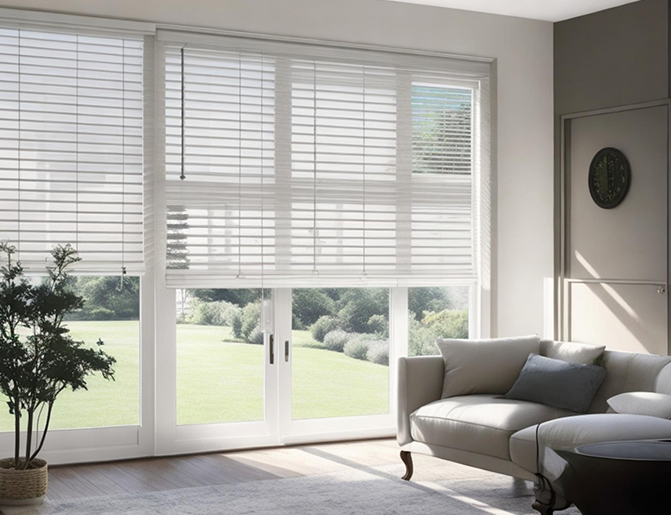
Off-the-shelf roller blinds sold in Dubai hypermarkets are made to generic sizes, use domestic-grade fabric that fades within one summer, and come with plastic brackets that crack under AC temperature cycling. Our roller blinds are fabric-matched by window direction, sized to the exact opening, and installed with aluminum tubes and UV-rated components that hold up through years of daily Dubai sun.
500+
Projects Completed15+
Years Experience100%
Satisfaction RateFrequently Asked Questions
The openness factor is the percentage of open weave in the fabric. A 1% factor blocks more glare and heat, suited for west-facing windows. A 5% factor lets more light through while still reducing direct sun, better for north or east-facing rooms.
Yes, if the recess depth is at least 60mm. Slim-line cassettes work in recesses as shallow as 40mm. Anything shallower requires a face-fix bracket above the frame. Measuring the recess before ordering prevents misfit installations that cannot be corrected on-site.
Most tubular motors we supply support RF remotes as standard. Smart home compatibility depends on the motor brand and hub. Certain brand motors integrate with major platforms. Confirm the required protocol before specifying a motor to avoid incompatible systems.
UV-stabilized solar and blackout fabrics retain color and structural integrity for 7 to 10 years under direct Dubai sun when specified correctly. Fabrics without UV stabilization degrade within 12 to 18 months on south and west-facing windows, showing yellowing and brittleness.
Yes. Door-mounted roller blinds use a bottom-fix channel that holds the hembar in position when the door opens and closes, preventing the blind from swinging freely. Face-fix brackets are used above the glass panel rather than inside the frame.