
Window Curtains
Custom window curtains in Dubai are perfect for villas, apartments, offices, and hospitality interiors. Regulate sunlight, enhance insulation, and refine spatial appeal.
Buy Window Curtains in Dubai
Windows in Dubai experience extreme sunlight exposure, high UV levels, and year-round cooling demands. Off-the-shelf curtains rarely address these environmental variables properly. We design custom window curtains based on exact window span, ceiling height, sun direction, and intended room function.
Each curtain panel is calculated using proper fullness ratios to ensure balanced pleating and smooth stacking when opened. Fabric density is selected according to glare intensity and required light filtration level, whether for living rooms, bedrooms, majlis areas, boardrooms, or retail spaces.
We use reinforced top headings, weighted bottom hems, and high-grade ceiling tracks or designer rods to ensure uniform drape fall and consistent glide performance.
Book a Free Visit
Why Choose Custom Window Curtains?
Unlike prefabricated panels, tailored window curtains respond to Dubai’s climate and interior design needs.
Solar Heat Interception
Dense curtain fabrics act as a thermal barrier, reducing direct solar gain before it spreads across interior surfaces.
Graduated Light Filtering
Layered textile systems for window curtains allow daylight moderation without abrupt brightness shifts.
Reduce Noise Levels
Thicker drapes absorb ambient sound waves, reducing echo in high-ceiling villas and open offices in Dubai.
Ceiling Height Enhancement
Full-drop curtain installations visually extend vertical space, making rooms appear taller and more balanced.
Precision Pleat Engineering
Wave, pinch, or ripple fold headings maintain symmetrical fabric distribution across the entire window span.
Zoned Privacy Control
Sheer and opaque curtain layers can operate independently, offering selective visibility throughout the day.
Benefits of Window Curtains in Dubai
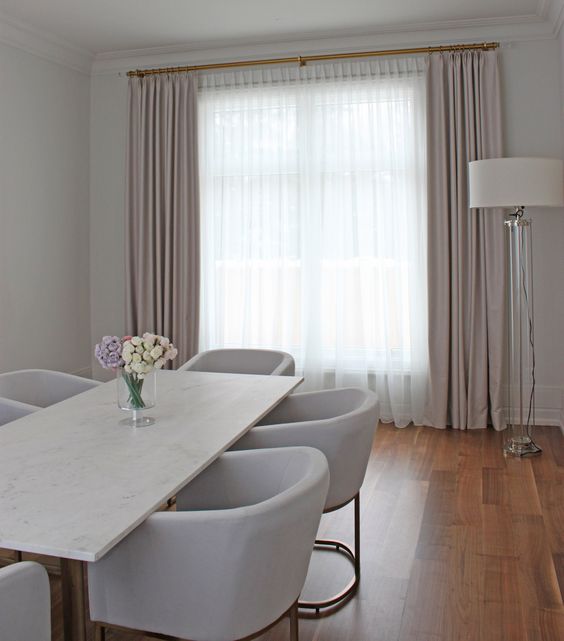
Curtains designed specifically for Dubai must address light intensity, thermal exposure, and dust conditions.
Glare Reduction
Direct desert sunlight can create sharp glare and reflection on floors and screens. Properly selected fabrics diffuse brightness while preserving natural illumination.
Temperature Control
When curtains form an insulating pocket between glass and room air, heat transfer slows. It improves cooling efficiency, especially in west-facing rooms.
Flexible Coverage
Curtains can remain partially drawn for filtered visibility or fully closed. This makes them suitable for bedrooms, media rooms, conference spaces, and majlis areas.
How to Select the Right Window Curtains
Choosing window curtains requires more than color preference. Structural and environmental factors determine long-term performance of curtains in Dubai homes and businesses.
Identify Sun Exposure Level
South- and west-facing windows requires thicker curtain fabrics or thermal lining to withstand prolonged UV intensity. Make sure the fabric or lining is dense enough.
Match Fabric Weight to Function
Lightweight sheers suit reception areas; medium-weight curtains are best for living rooms; blackout curtains are ideal for sleep environments and high privacy levels.
Calculate Correct Panel Width
Panels should measure at least twice the window width so that they form natural pleat depth and proper coverage. This way, your curtains will look proportioned suitably.
Choose Mounting Configuration
Ceiling-mounted tracks for window curtains provide seamless vertical flow, while wall-mounted curtain rods create decorative framing. So, choose accordingly.
Evaluate Dust Resistance
In roadside or high-traffic areas, you should choose tightly woven curtain materials that resist dust accumulation so that your room doesn't collect too much on regular basis.
Consider Fade Protection
UV-stabilized curtain fabrics prevent discoloration and maintain visual integrity over time. If you're going to hang curtains in direct sunlight, pick your fabric wisely.
Window Curtain Installation & Customization
Professional installation and customization of window curtains ensure operational smoothness and long-term structural reliability.
Consultation
Gather details about curtains & your space needs.
Measurement
Accurate drop height, stacking width, and track alignment
Customization
Choose fabric, lining type, pleat format, and hardware finish.
Installation
Fix tracks/rods with brackets, and panels are aligned properly.
Maintenance
Clients receive instructions for periodic cleaning and support.
Flexible Scheduling Available
Book appointments at a time of your convenience for custom curtains and smooth installation.
Costs & Value of Window Curtains
Window curtain pricing varies according to fabric classification, lining thickness, pleat design, hardware, and fabric size. Get in touch with us to get a precise quote for your window curtains.
-
Quotation Breakdown
Transparent pricing of window curtains.
-
Reduced Cooling Load
Improve air conditioning & energy efficiency.
-
Extended Fabric Lifespan
Quality stitching, reinforced headings, and better materials
-
Top-Notch Quality
Premium-quality window curtains

Upgrade Your Interiors with Custom Window Curtains
Transform your property with window curtains engineered for Dubai’s high-sun conditions and modern architectural layouts. Our fabrication accuracy, structured installation, and climate-conscious material selection ensure long-term performance and visual balance.
500+
Projects Completed15+
Years Experience100%
Satisfaction RateFor effective heat reduction in Dubai, thermal-lined polyester blends or triple-weave blackout fabrics perform best. These materials reduce solar heat gain by creating an insulating air layer between the curtain and the window glass. For west-facing villas and high-rise apartments exposed to intense afternoon sun, a combination of dense front fabric with thermal backing significantly improves indoor temperature stability and reduces cooling load.
To achieve balanced pleats and full coverage, curtain panels should measure between 1.8x to 2.5x the actual window width. For example, a 3-meter-wide window typically requires 5.4 to 7.5 meters of total fabric width. Insufficient fullness results in flat, stretched panels that reduce both privacy effectiveness and visual appeal. Proper fullness ensures structured wave formation and consistent stacking when opened.
Yes. When properly lined and installed close to the ceiling, curtains reduce direct solar heat penetration, which lowers indoor temperature spikes. This decreases air-conditioning runtime, particularly during peak summer months. While savings vary by exposure and insulation quality, thermal-lined curtains can noticeably improve cooling efficiency in sun-facing rooms.
For contemporary interiors, curtains should be ceiling-mounted or installed at least 10–20 cm above the window frame. This elongates wall height visually and prevents light gaps at the top. In villas with high ceilings, full-height installation enhances architectural proportion and allows better blackout performance compared to frame-level mounting.
High-quality, UV-resistant curtains typically maintain color stability and structural integrity for 7–10 years in Dubai. Longevity depends on fabric grade, sun exposure direction, and maintenance frequency. West-facing windows may experience faster fading if non-UV-stabilized fabrics are used. Regular light vacuuming and periodic professional cleaning extend lifespan significantly.